


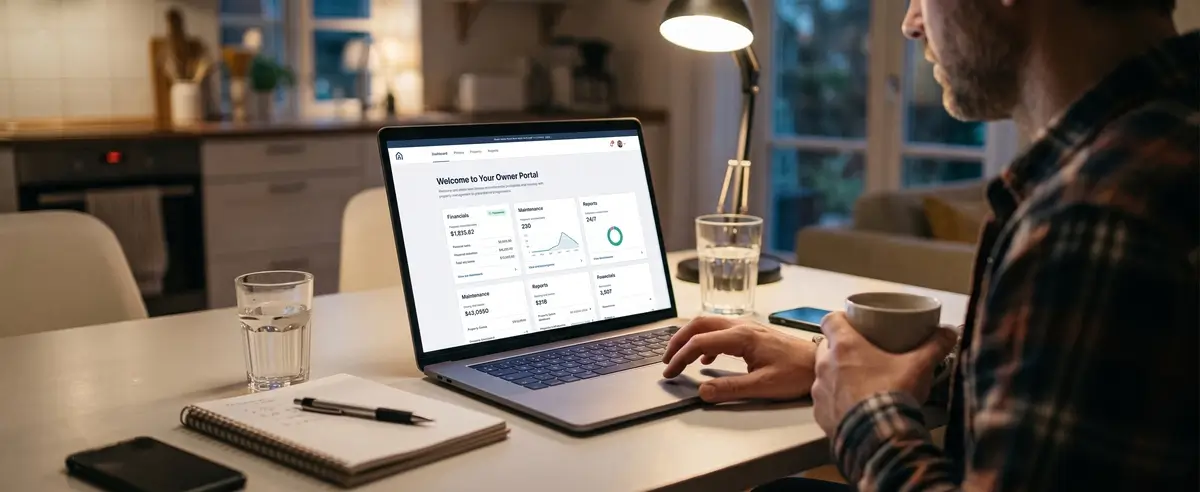
Often, rental owners review cash flow on weekends, and HOA board members prepare for meetings after work. In San Antonio property management, 24/7 portal access has become the standard way to meet that need.
An owner portal or HOA portal is a secure online account where users can view financials, submit maintenance requests, pay dues, and review governing documents at any hour. Many communities pair it with professional San Antonio HOA management for added support.
This guide explains what portals handle, what live staff handle, and what Texas law requires.
Key Takeaways
- 24/7 portal access covers self-service tasks at any hour, while live staff handle decisions during business hours.
- Owner portals typically provide monthly statements, year-end tax forms, and electronic disbursements.
- Texas law requires HOAs with 60 or more lots, or with a management company, to post dedicatory instruments online.
- A portal plus on-call emergency maintenance gives HOA boards strong coverage without full-time live staffing costs.
What 24/7 Portal Access Means for San Antonio Property Owners
24/7 portal access means owners and residents can handle self-service tasks online at any hour, while a separate emergency line covers urgent problems.
Self-Service Tools vs. Live Support
Most portals let you make payments, download documents, review reports, and submit requests on your own schedule. Live staff keep office hours, so questions needing a conversation usually wait until the next business day.
How the Portal and Emergency Line Work Together
Many professional property managers offer emergency maintenance support 24/7 by phone. The portal handles everyday tasks, while the emergency line handles issues that need a human response right away.
Realistic Response Times for Portal Requests
A request submitted late at night is logged immediately, but routine items are typically reviewed once the office reopens. Knowing this upfront prevents frustration and keeps expectations aligned.
Core Owner Portal Features for San Antonio Rental Owners
A quality owner portal gives single-family, multifamily, and commercial owners a real-time view of their investment's finances and upkeep. Common property management owner portal features include:
- Monthly financial statements
- Year-end tax forms
- Real-time performance tracking
- Electronic owner disbursements
- Work order status updates
Financial Reporting and Disbursements
Monthly statements help you monitor cash flow, and year-end tax forms simplify filing season. A streamlined rent collection process makes paying rent convenient for tenants and moves funds quickly to the owner's chosen bank account.
Maintenance and Work Order Tracking
Online work order systems let tenants submit and track requests while the property manager monitors each job. You can follow repairs from start to finish without waiting for a status update.
HOA Portal Tools for Homeowners and HOA Board Members
An HOA portal is a secure online hub for community information, payments, and requests. When considering what to expect from an HOA portal, think in 2 layers: homeowner tools and board access.
Homeowner Tools and Community Updates
Most HOA portals give homeowners round-the-clock access to:
- Online dues payments
- Common-area maintenance requests
- Governing documents and meeting minutes
- Community announcements
Keep your contact details current so notices reach you.
Board-Level Access and Permissions
Role-based permissions let HOA board members review financial reports and oversee work orders that general homeowners may not see. These permissions also keep sensitive records, such as delinquency files, secure.
Architectural Requests and Violation Tracking
Many HOA portals let homeowners submit architectural requests online and track their status. Digital violation tracking also helps boards enforce covenants consistently and fairly.
Texas HOA Website and Transparency Requirements
Chapters 207 and 209 of the Texas Property Code set rules for how many HOAs share governing documents, meeting notices, and fine policies. An HOA portal is often the simplest way to comply.
Online Access to Dedicatory Instruments Under Section 207.006
Texas Property Code §207.006 applies to associations with at least 60 lots and to any association with a management company. Covered HOAs must post their current dedicatory instruments, such as the declaration, bylaws, and rules, on a member-accessible website.
Board Meeting Notices and Agendas
Under Texas Property Code §209.0051, notice that is posted, including on the association's website, and emailed to owners who registered an address must go out:
- At least 144 hours before a regular board meeting
- At least 72 hours before a special board meeting
Enforcement Policies and Fine Schedules
Under Texas Property Code §209.0061, associations authorized to levy fines must adopt an enforcement policy listing violation categories, a fine schedule, and hearing information. It must be posted on a member-accessible website or sent to owners annually.
How to Route After-Hours Maintenance Requests
Match each after-hours issue to the right channel: emergencies go to the 24/7 phone line, and routine requests go through the portal.
Emergencies That Warrant an Immediate Call
Call the emergency line for issues that threaten safety or could cause major damage overnight:
- Active water leaks or burst pipes
- AC failures during a San Antonio heat wave
- Heating loss during a hard freeze
- Common-area hazards or broken security gates
Routine Requests That Belong in the Portal
Billing questions, document requests, non-urgent repairs, and architectural submissions belong in the portal. Logging them online creates a clear record and keeps the emergency line free.
Balancing Coverage with HOA Budgets
Full 24/7 live staffing adds real cost and draws from the same budget that funds reserves and maintenance. For most associations, a portal paired with on-call emergency maintenance offers strong coverage at a reasonable cost.
FAQs
1. What should I do if my tenant reports a water leak at night?
Call the 24/7 emergency line instead of submitting a portal request, since active leaks need immediate action. Routine portal requests submitted after hours are reviewed once the office reopens.
2. How can I tell when a repair at my rental is finished?
Log in to the owner portal to follow the work order from submission to completion. In most portals, you can check its status there without calling the office.
3. How do I find my HOA's website or portal?
Search for your association's management certificate in the TREC HOA Management Certificate Database, which should list its website address. If the certificate isn't there, your HOA manager or the county clerk can help.
4. Does my HOA have to share its fine schedule with owners?
Yes, if your association can levy fines, Texas law requires an enforcement policy with a fine schedule. The HOA must post it on a member-accessible website or send it to owners annually.
Clear Expectations Are the Real Value of Round-the-Clock Access
The most useful portal is the one that tells you exactly what happens next. Owners and boards lose time when they are unsure whether a request was received or who is handling it. Technology sets the pace, but people close the loop.
At Davidson Properties, we have served San Antonio since 1989. We manage residential, multifamily, HOA, and commercial properties with real-time online access and 24/7 emergency support. Contact us today to see how our portal and local team can serve your property or community.
